

Good Morning!
Welcome to this week’s edition of Grinfi Political Risk Edge, your trusted source for expert political risk analysis and strategic intelligence.
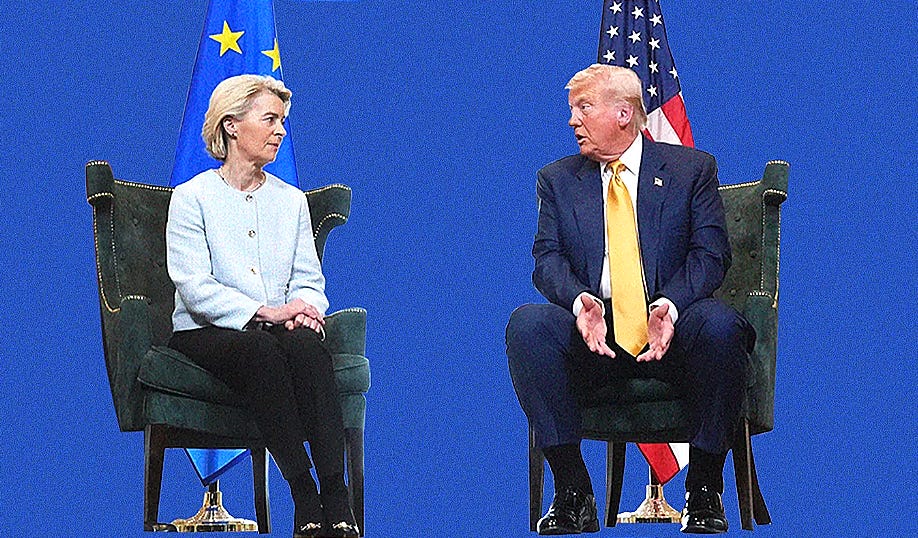
Now, on a lighter note, let’s start the week with a laugh 😄 to brighten the mood. Remember, a little humor never hurts before moving on to the serious stuff.
High Impact Situational Updates
From Grinfi Political Risk Observatory (GPRO), here are the key issues that are expected to shape political risk this week.
Situation as of this morning- Markets are opening cautiously today as concerns over a potential “trade war 2.0” intensified following the Trump administration’s implementation of sweeping new tariffs late last week. Effective Friday, July 24, the United States imposed levies ranging from 10% to 12.5% on imports from more than 60 nations, covering nearly all American trade volume (~ 99.4% of U.S. imports). The administration is bypassing previous legal hurdles by invoking Section 301 of the Trade Act of 1974, framing the duties as penalties for failures to police forced labor in supply chains.
While allies such as Canada and the UK face a 10% baseline rate, major competitors including China and Brazil are subject to the 12.5% ceiling. The move has drawn immediate condemnation from the European Union, which rejects the forced‑labor justification as a pretext for protectionism.
Trade War Escalates with Canada. Meanwhile, tensions with Canada have also reached a breaking point beyond the baseline tariffs. Last Monday (July 20), President Trump invoked Section 338 of the Tariff Act of 1930 to impose a punitive 50% tariff on approximately $20 billion in specific Canadian goods, including wine, cement, dairy, and hockey sticks. In a stark diplomatic rebuke, Canadian Prime Minister Mark Carney canceled the joint opening ceremony for the Gordie Howe International Bridge, labeling the US actions a direct violation of the USMCA. The Trump administration argues these measures counter “discriminatory” Canadian practices, but allies warn of severe supply chain disruptions.
Economic and Legal Ramifications. The reintroduction of broad tariffs is already triggering market volatility and stoking inflation fears. A new Harris Poll commissioned by the Guardian reveals that 70% of Americans believe