

Good Morning!
Welcome to this week’s edition of Grinfi Political Risk Edge, your trusted source for expert political risk analysis and strategic intelligence.
Now, on a lighter note, let’s start the week with a laugh 😄 to brighten the mood. Remember, a little humor never hurts before moving on to the serious stuff.
High Impact Situational Updates
From Grinfi Political Risk Observatory (GPRO), here are the key issues that are expected to shape political risk this week.
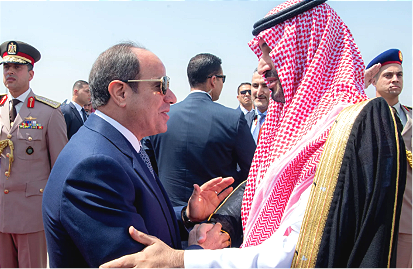
Egypt’s parliament will continue debating today whether to authorize President Abdel Fattah el-Sisi to deploy military forces to defend Saudi Arabia if Riyadh requests assistance, as Houthi attacks keep the Saudi capital’s main airport closed.
Brent settled at $109.86 last Friday, its highest since May, after a record month of attacks on ships near Hormuz. Iranian political leaders say they will reopen the Strait within six days if Washington lifts its blockade, while the Islamic Revolutionary Guard Corps (IRGC) insists that all transit will remain prohibited.
Organizers say 800,000 people marched across France last Saturday as the student movement merged with protests over fuel prices, with violence and looting reported in Paris, Lyon and other cities. The National Assembly is expected to vote on the revenue section of the 2027 budget tomorrow. With the Socialists having already tabled a motion of rejection and the far-right Rassemblement National announcing that it will vote against the bill, passage through the normal legislative process now looks highly unlikely.
If the vote fails, will Lecornu fall back on Article 49.3, which allows the government to push the text through without a vote, or resort to a budget by ordinance? For the full analysis, see the Assessment of the Week section of this briefing.
Meanwhile, a broader student protest movement is also spreading across several other European countries, including in Albania, Italy, Belgium, Greece, Germany, Spain, and Portugal, with unrest also reported in Austria.
Albertans vote today on a question that could start the process toward a separation referendum. The polling average has 68% choosing to remain in Canada. Is the separatist push in Alberta already dead?
Situation this morning. What support can Egypt realistically offer Saudi Arabia against the Houthis, and at what cost to the wider security dynamics across the Gulf region? This appears to be one of the most difficult questions facing skeptical members of Egypt’s parliament, as debate continues today