

Good Morning!
Welcome to this week’s edition of Grinfi Political Risk Edge, your trusted source for expert political risk analysis and strategic intelligence.
Now, on a lighter note, let’s start the week with a laugh 😄 to brighten the mood. Remember, a little humor never hurts before moving on to the serious stuff.
High Impact Situational Updates
From Grinfi Political Risk Observatory (GPRO), here are the key issues that are expected to shape political risk this week.
— The US president has offered voters cash to keep his party in office and suggested Congress has no say in the matter. Is this political bribery?
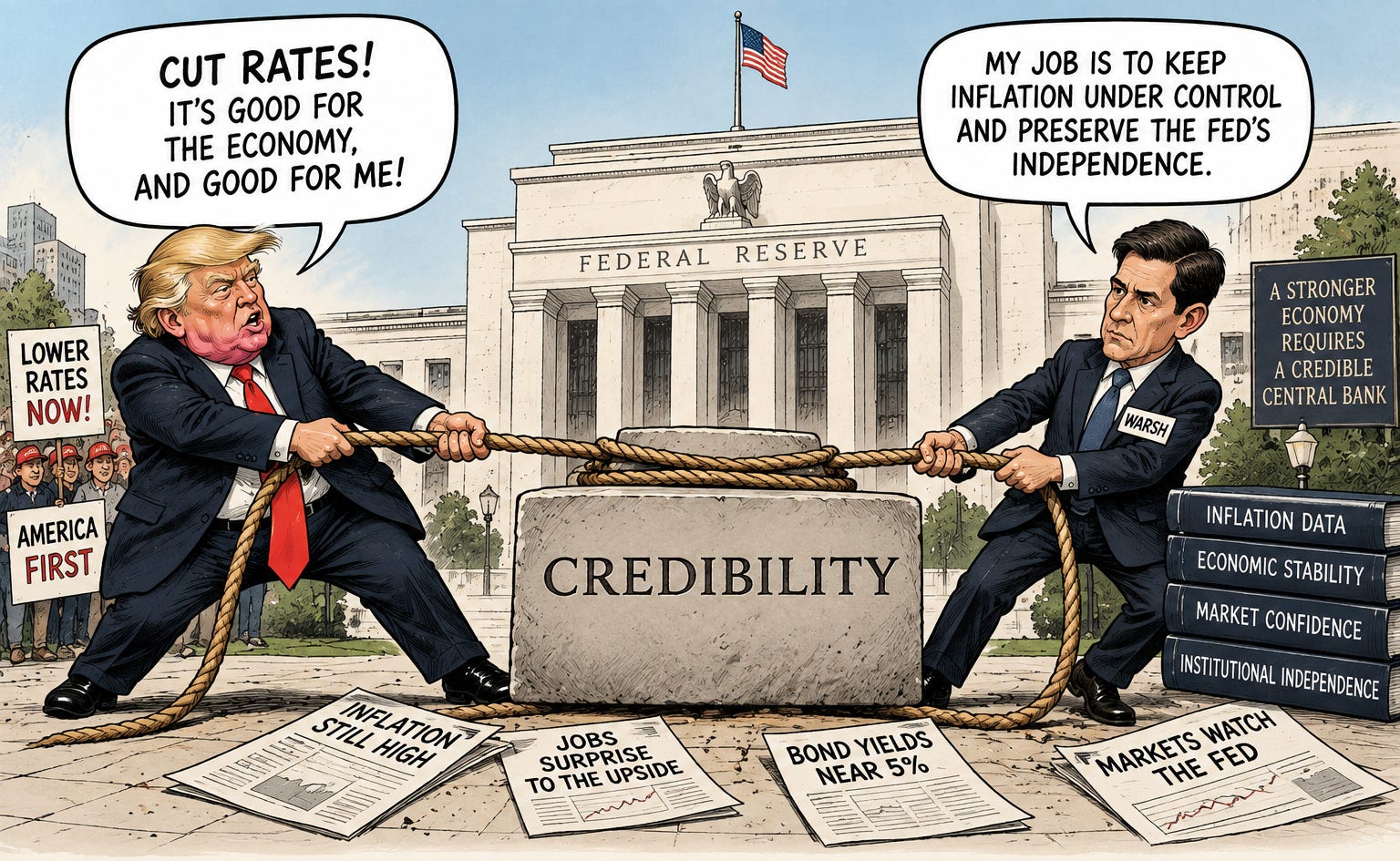
— A Federal Reserve chair hired to cut rates is heading into this week’s meeting with all the economic data pointing toward a hike. Will he derail the Trumpapalooza?
— Yemen’s Houthi militia has completed a four day advance along the Red Sea coast, capturing the port of Mocha, the Hanish Islands and, most recently, Perim Island. This has given the Houthis greater control over the Bab el Mandeb Strait, alongside the existing threat they pose to the Strait of Hormuz.
— And the people building the world’s most capable AI systems have spent the week publicly warning that they are not confident they can safely control what they are creating. Is Killer AI here to stay, and have we already developed our own existential menace?
Situation this morning. Americans are still trying to make sense of what President Trump said at the Republican Party’s midterm convention in Dallas last week. The U.S president pledged $5,000 to every American adult if Republicans retain control of both chambers of Congress in November.
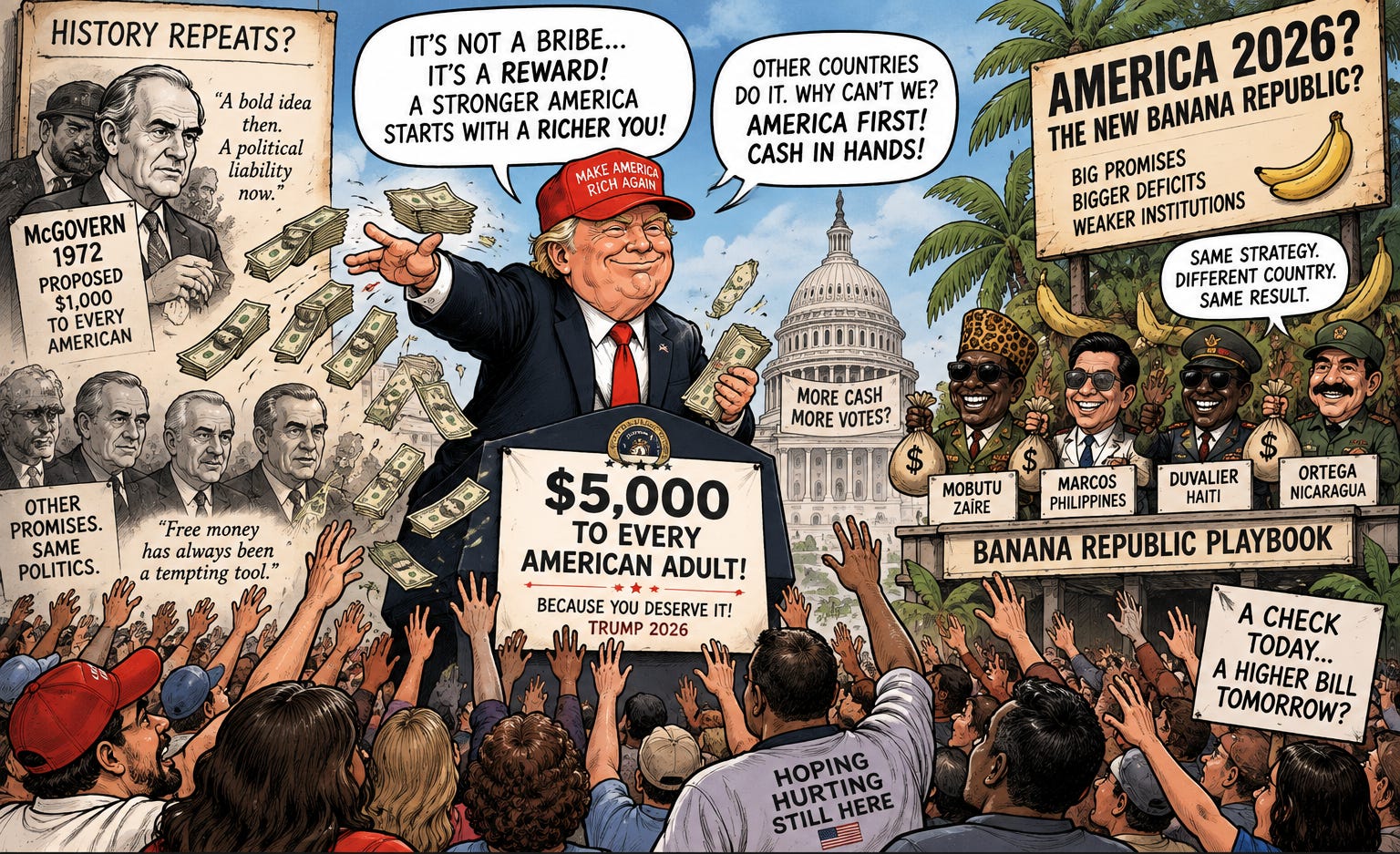
Vice President Vance clarified the reasoning underpinning the proposal that same night in an interview with Fox News. If Republicans keep control of Congress, Vance said, Americans would “share in some of the benefit” of the wealth being created. Put simply, the $5,000 is being offered as a “compensation” for keeping Republicans in power.
Legal opinion is divided on what to call this. Some describe it as coming “dangerously close, if not over the line, into political bribery.” Others cite Brown v. Hartlage, the 1982 Supreme Court decision holding that a candidate’s promise of broad financial benefit to all voters is not itself unlawful, and liken the pledge to an ordinary promise to cut taxes.
Trump then went further. Asked by CBS News whether the payments would require congressional approval, he said: “Well, we think not. I think they will do it if we needed it. But we think not.” House Speaker Mike Johnson corrected him days later, stating that congressional approval is in fact required, while pledging to pursue it regardless. This is not the only recent instance of the president suggesting Congress is optional.
At the same time, the administration’s record with this kind of promise is worth noting. This would be the third payment pledged, despite the previous two never materializing. A “DOGE dividend,” floated with Elon Musk in February 2025. Then came a $2,000 “tariff dividend,” promised on Truth Social that November. Noticeably, each iteration is always larger than the last. Yet, none has been paid.
If anything, US history offers a useful precedent. Many Americans can still remember what happened the last time a political leader proposed handing out cash this directly during a crucial election. In 1972, Democratic Senator George McGovern from South Dakota ran on a “demogrant,” a proposed $1,000 annual payment to every American, worth roughly $8,000 today. Republicans seized on it immediately.
In fact, one of Nixon’s most effective campaign television ads showed a construction worker looking down from a skyscraper, saying: “McGovern wants to put everybody on welfare. I still believe in the right to work. It’s sacred.” The proposal contributed to one of the largest electoral defeats in