

Good Morning!
Welcome to this week’s edition of Grinfi Political Risk Edge, your trusted source for expert political risk analysis and strategic intelligence. Thorough, insightful, and industry-focused. We deliver clarity in uncertainty and strength in decision-making. Anticipate, Adapt, and Excel!
Now, on a lighter note, let’s start the week with a laugh 😄 to brighten the mood. Remember, a little humor never hurts before moving on to the serious stuff.
From Grinfi Political Risk Observatory (GPRO), here’s what we’re monitoring:
High Impact Situational Updates
“At Grinfi, we track immediate fragility and systemic contagion to ensure leaders see risks before they spread.”
EXECUTIVE SUMMARY
Here are the key issues that are expected to shape political risk this week.
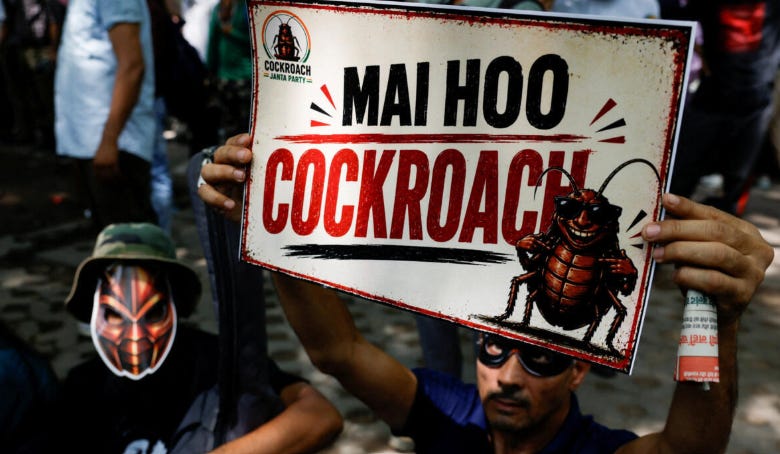
On June 6, hundreds of mostly young Indians gathered at Jantar Mantar in New Delhi, the capital’s designated protest strip, under the banner of the Cockroach Janta Party.
Some wore cockroach masks. Others carried dog-eared exam guides. The party, a deliberate parody of Prime Minister Narendra Modi’s Bharatiya Janata Party, was founded three weeks ago after India’s Chief Justice Surya Kant compared unemployed youth who criticized the government to “cockroaches” and “parasites” during a May 15 court hearing. Kant later said his remarks were taken out of context, but the political damage was already done.
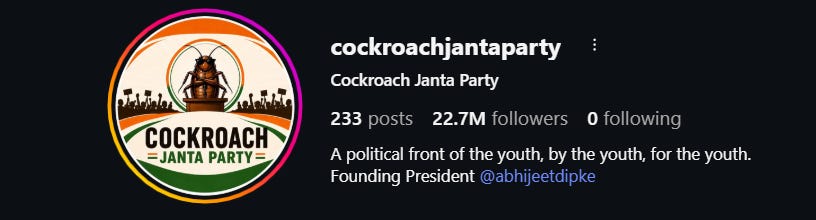
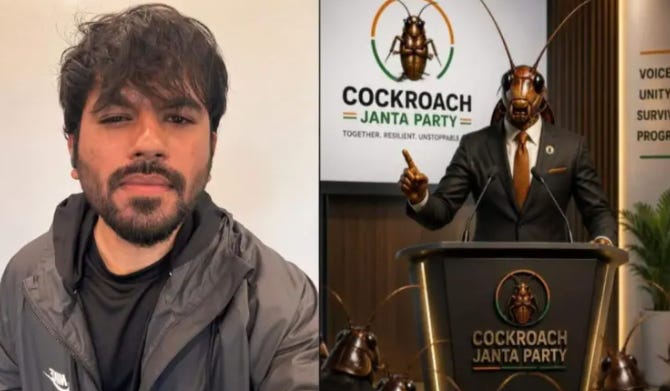
Abhijeet Dipke, a 47-year-old political communications strategist and Boston University student who previously worked with the Aam Aadmi Party, turned the insult into a movement. Within a week of launching social media accounts, the CJP’s Instagram page surpassed both the BJP and the Indian National Congress in followers. It now stands at 22.7 million. The movement has since engaged in offline activities, including clean-up drives and protest rallies.
However, the Indian government continues to dismiss the growth of the online movement, claiming it is powered by Pakistani bots, although the CJP has published evidence disproving these claims. Meanwhile, the founder’s account was hacked, and the movement has been subjected to routine cyber attacks by forces allegedly linked to the Indian government.
Nonetheless, at the June 6 rally, the organizers issued a formal ultimatum: the Modi government has seven days to dismiss Education Minister Dharmendra Pradhan over alleged irregularities in major national examinations, or face a nationwide stir. A CJP spokesperson told media this was “just a trailer.” The party holds no registration with the Election Commission of India but has become a channel for anger over unemployment, political corruption, exam scandals, and a broader sense among Indian youth that the system has failed them.
While the immediate threat posed by the organization remains limited, our assessment indicates a gradual but notable delegitimization of established